
What do I need to become a falconer? (in order of priority)
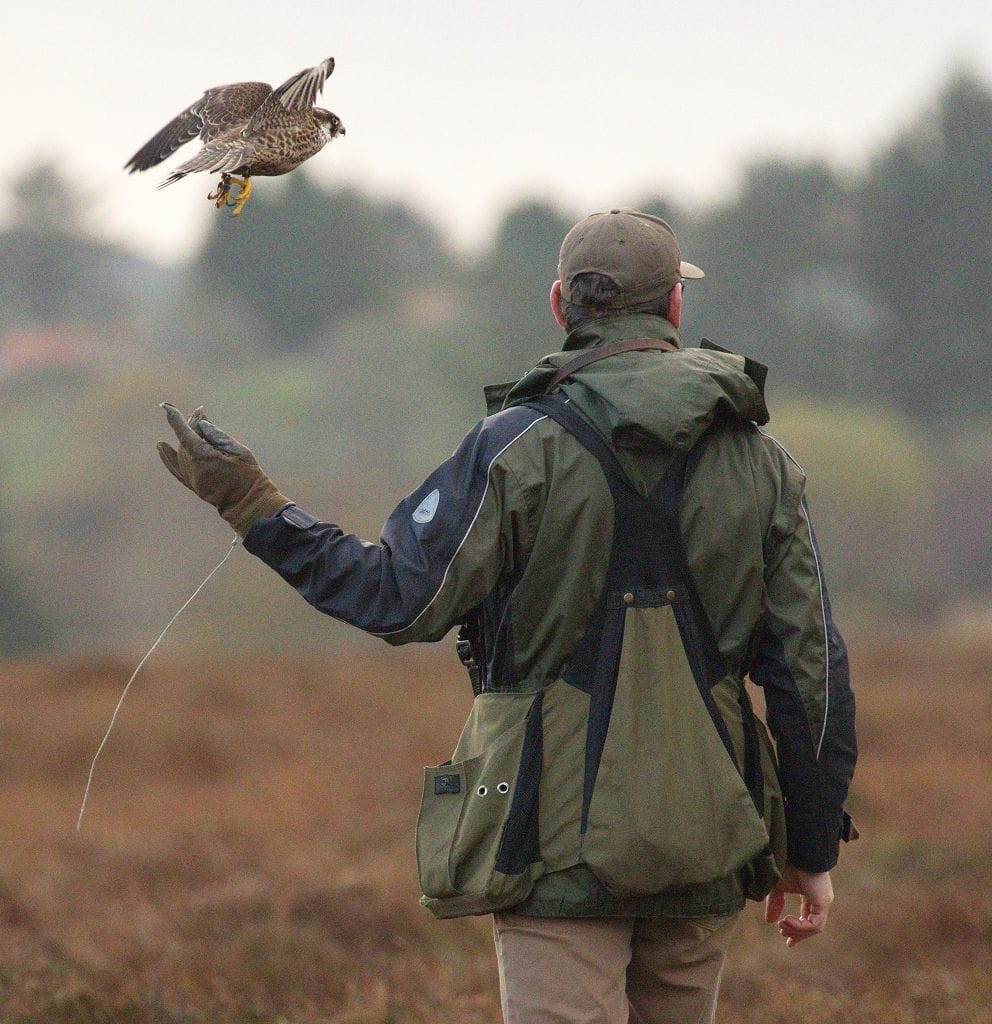
- An interest in safeguarding biodiversity and habitats
The practice of falconry is contingent on the health of wild raptors, their prey species and their habitats. Without these things, it cannot take place, which is why falconers take a keen interest in sustainable use and stewardship of their local environment. - The will to hunt
Falconry is the pursuit of game in its natural state by means of a trained raptor. Every fibre of a hawk’s being wants to chase and catch quarry, and while most flights end without a kill, it’s important for their mental and physical health that they are regularly flown at live game. It is not about having a cool pet to show off. Flying displays and aviary breeding are not falconry. - Land to fly on and quarry to hunt
The criterion for which hawk and branch of falconry you wish to practise depends on the land and game you have access to. The help and advice of an experienced falconer is the best way to arrive at this decision, after which you will need to permission from landowners to fly on their land, something that often requires public liability insurance on the falconer’s part. - An experienced falconer living near you
Falconry knowledge is mostly transmitted from person to person, and being able to call on the help and guidance of an experienced falconer is essential. The Irish Hawking Club strongly advises anyone considering taking up falconry to shadow and assist an experienced falconer for at least a season before starting the process of acquiring their own hawk. The IHC can assist in putting beginner falconers in contact with experienced mentors. There are also a number of bird of prey centres that offer introductory courses on falconry skills. - Books
There are some excellent books on falconry that beginners should seek out. These include Falconry & Hawking by Phillip Glasier, Understanding the Bird of Prey by Dr Nick Fox, and Training Birds of Prey by Jemima Parry-Jones. - Knowledge of legislation
It is your responsibility to familiarise yourself with all laws and regulations pertaining to falconry and the keeping of raptors. Falconers in the Republic of Ireland must hold both a falconry licence and a licence to possess a bird of prey. A handful of licences are issued each year to harvest species of least concern for falconry purposes, provided the applicant fulfils certain criteria. The number of wild taken hawks for falconry is inconsequential compared to the large natural first-year mortality rate, and has no effect on wild stocks (Millsap, B.A, & Allen, G.T., 2006 Effects of Falconry Harvest on Raptors). Bird of prey licensing in the Republic of Ireland is under the jurisdiction of the National Parks and Wildlife Service, and applicants are often visited to have husbandry and facilities vetted. In Northern Ireland, falconry is licensed through the Northern Ireland Environment Agency.
We urge new applicants and remind our members, that incomplete licence application forms and lack of contact details lead to delays. Please be sure you have completed your licence applications correctly. If you need help, please ask.
Both new and existing falconers are encouraged to make contact with their local ranger BEFORE sending in any licence application. This considerably helps to speed up responses. Here is a link to the contact numbers for local rangers (twenty six counties). - Time and headspace
A hunting hawk requires daily management and attention. You don’t need to spend all of every day with the hawk but part of the day must inevitably be organised around them. During the hunting season, falconers should aim to fly most days of the week, weather-permitting. - Hawk food
You will need a separate freezer stocked with specially produced raptor wholefood which must be thawed and prepared each day. If you are squeamish about butchering chicks, quail, rats, rabbits, etc., falconry mightn’t be for you. - A good vet
A local vet specialising in dogs and cats will not necessarily know best practice if your hawk gets injured or has a health issue. Finding a good vet with experience of raptor medicine is therefore essential. - Equipment and husbandry
Aside from a safe, clean mews and weathering area to house your hawk, an array of special equipment is needed. Some of this must be purchased, some of it must be handmade by the falconer. Every falconer today uses radio or GPS telemetry so that hawks can be tracked if they go out of sight. This is a non-negotiable for exotic species and hybrids. Safe and secure raptor perches are another non-negotiable, as is reliable tethering equipment. A well-fitting hood for your hawk is recommended but not essential. If your flying ground is a car journey away, you must have a safe, comfortable travelling box for your hawk. Gloves, perches, hawk bath and mews quarters must be regularly cleaned and disinfected. All equipment requires maintenance, cleaning and replacement. - A bird
And so to the last thing you need. You must be sure you can provide all of the 1-10 essentials listed here before you can begin to look at actually getting a bird. The good news, however, is that you don’t absolutely have to get a hawk of your own to enjoy falconry. The Irish Hawking Club has many members who are not currently in a position to keep a hunting hawk, but who still attend fieldmeets, enjoy spectating, help out with the committee and contribute to the falconry community here.
 English
  Irish
Irish  French